In 32 patients across 5 scanners, SubtleMR™ cut 3D T1 brain MRI scan time in half while keeping hippocampal measurements consistent with standard scans.
3D T1-weighted MRI is the backbone of brain volumetrics, but it’s one of the longer sequences in a neuro exam. This study, presented at ISMRM 2020, asked whether deep learning could cut that scan time in half without changing the numbers that volumetric software reports.
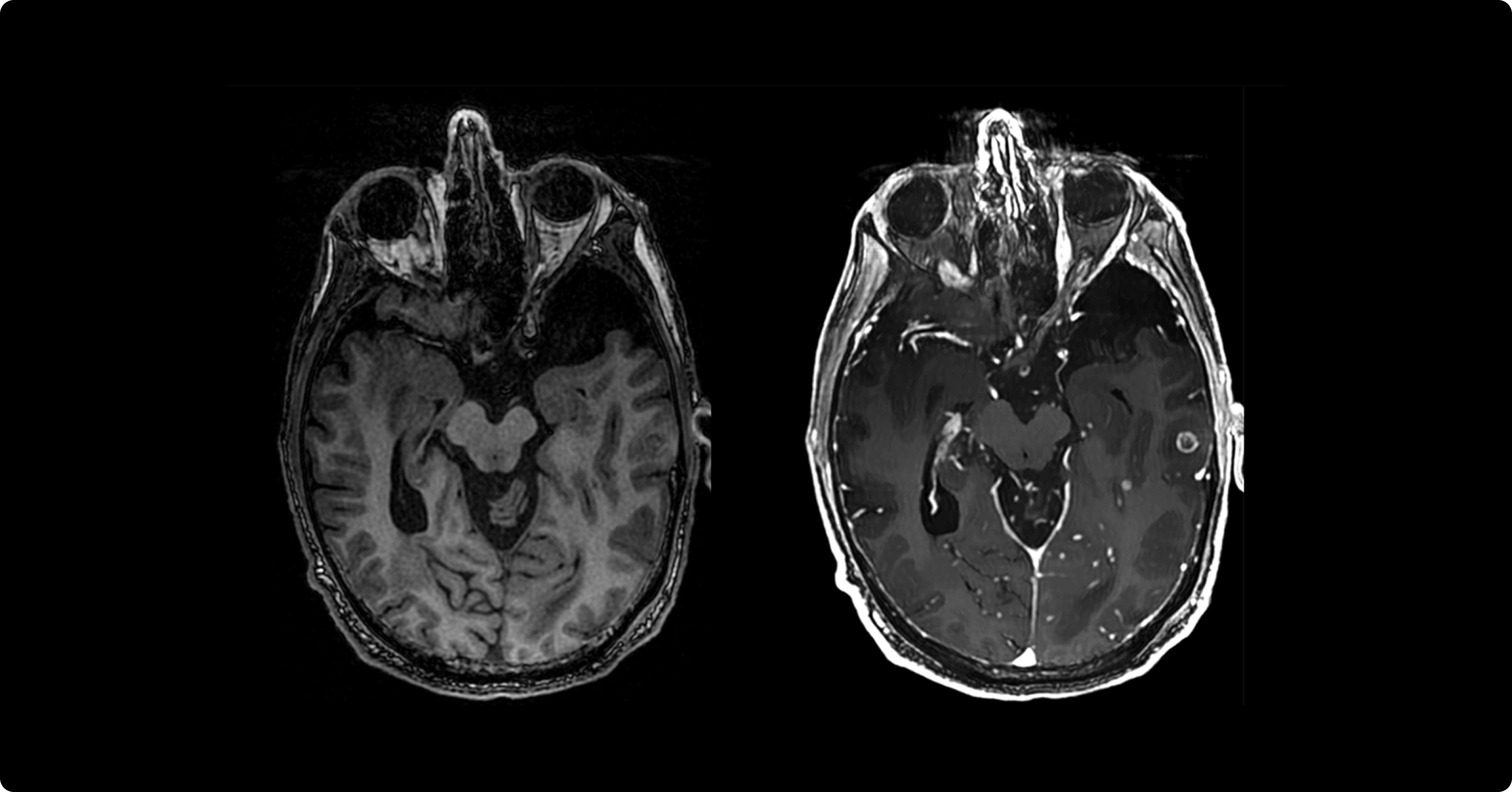
Thirty-two patients, average age 68, had two 3D T1-weighted scans in the same exam: a routine clinical scan and a faster one using half the phase encodes and half the scan time. The group included cognitively normal patients and patients with mild cognitive impairment or Alzheimer’s disease. The fast scans were enhanced with SubtleMR™, and both sets were analyzed with NeuroQuant. Scans came from 5 different 3T scanners, 3 GE and 2 Siemens.
The measurements held. Hippocampal occupancy score, a biomarker used to track neurodegenerative disease, averaged 0.68 on both the standard and enhanced fast scans. Hippocampal volume and inferior lateral ventricle volume showed no statistical difference either. Superior lateral ventricle volume differed by about 2%. Correlation plots and Bland-Altman analysis showed strong agreement across the board.
Because the results stayed consistent across scanner types and across a range of cognitive conditions, the authors see it as evidence the software generalizes. They conclude that deep learning can enable accurate volumetric brain MRI with 2x faster scans. This work led into a larger multicenter trial published in AJNR in 2021.
Publications
MRI
MRI

Publications
MRI
MRI