Across 40 subjects and 6 scanners, 60% faster brain MRI enhanced with deep learning produced the same volumetric measurements as standard of care.
Quantitative brain volumetrics give radiologists numbers to track, but the volumetric sequences behind them take time. This prospective multicenter study, published in the American Journal of Neuroradiology, asked whether deep learning could cut that time by 60% without changing the measurements.
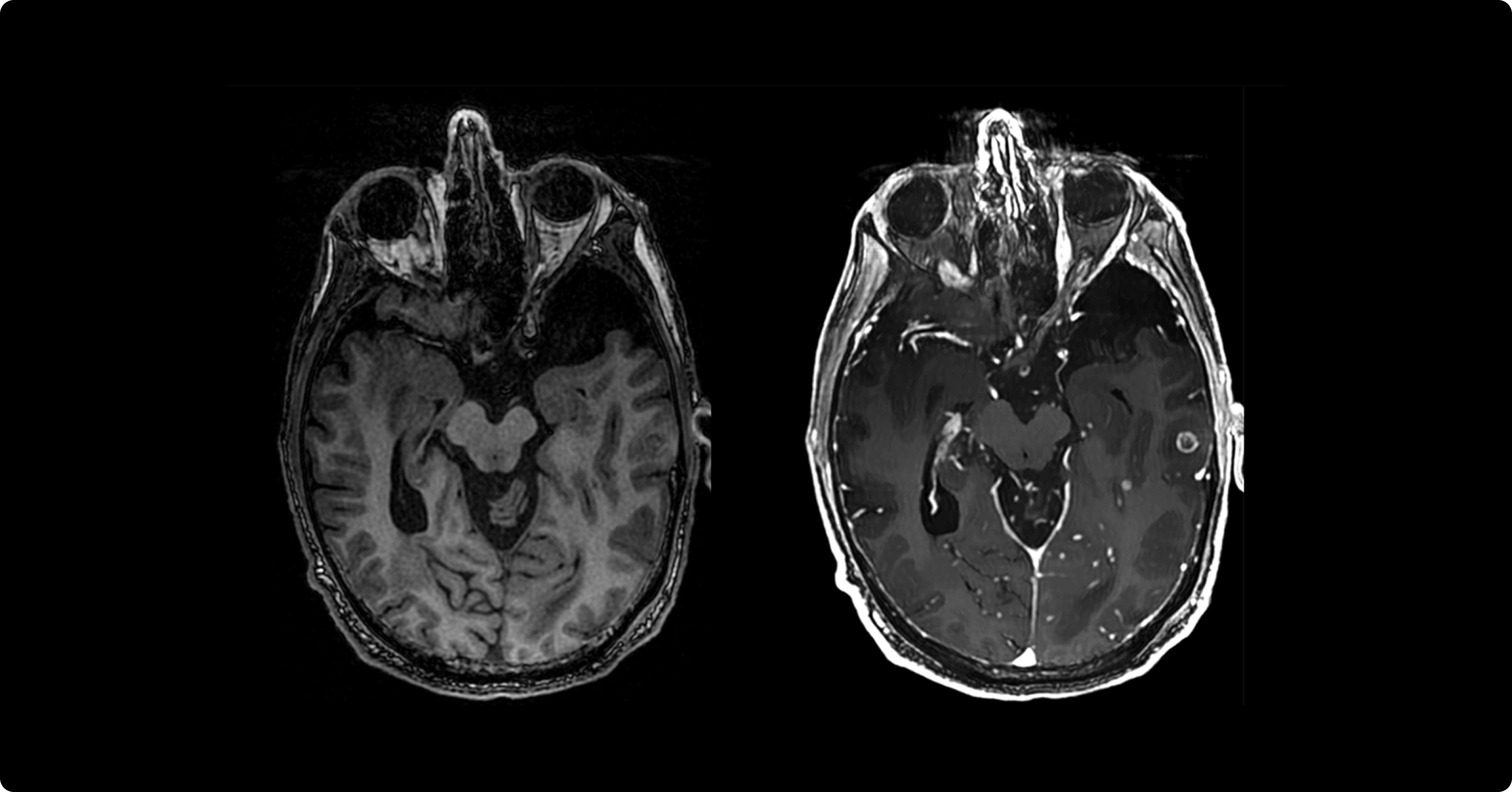
Forty subjects had brain MRI on 6 scanners across 5 institutions. Each got a standard-of-care scan and an accelerated scan with 60% shorter sequence time. The accelerated scans were then processed with SubtleMR™, a vendor-agnostic, DICOM-based deep learning tool.
The team ran two tests. First, they put all three versions (standard, accelerated, and accelerated with deep learning) through NeuroQuant quantitative analysis, and a neuroradiologist sorted each into clinical disease categories. Second, 2 neuroradiologists compared 360 series in blinded, randomized, side-by-side pairs. They rated apparent signal-to-noise ratio, sharpness, artifacts, anatomic and lesion conspicuity, image contrast, and gray-white differentiation.
The volumetric results held. Biomarker measurements and clinical classifications showed no difference between standard-of-care and enhanced accelerated scans. On image quality, readers rated the enhanced accelerated scans statistically better than standard of care across features. The accelerated scans without enhancement fell behind both on every feature.
For quantitative imaging, a better-looking image isn’t enough. The measurements have to come out the same, and in this study they did.
The authors conclude that deep learning allows a 60% reduction in sequence scan time while keeping volumetric quantification accurate and clinical classification consistent. They suggest shorter scans could make volumetric MRI more practical in routine clinical settings.
Publications
MRI
MRI
Publications
MRI
MRI