In 11 patients, three readers rated 3D FLAIR enhanced with SubtleMR™ sharper and cleaner than standard scans, at 27% less scan time.
3D FLAIR is a workhorse sequence in brain MRI, and high-resolution versions take time. This pilot study, presented at the European Congress of Radiology, tested whether deep learning could make a shorter 3D FLAIR look as good as the standard one, or better.
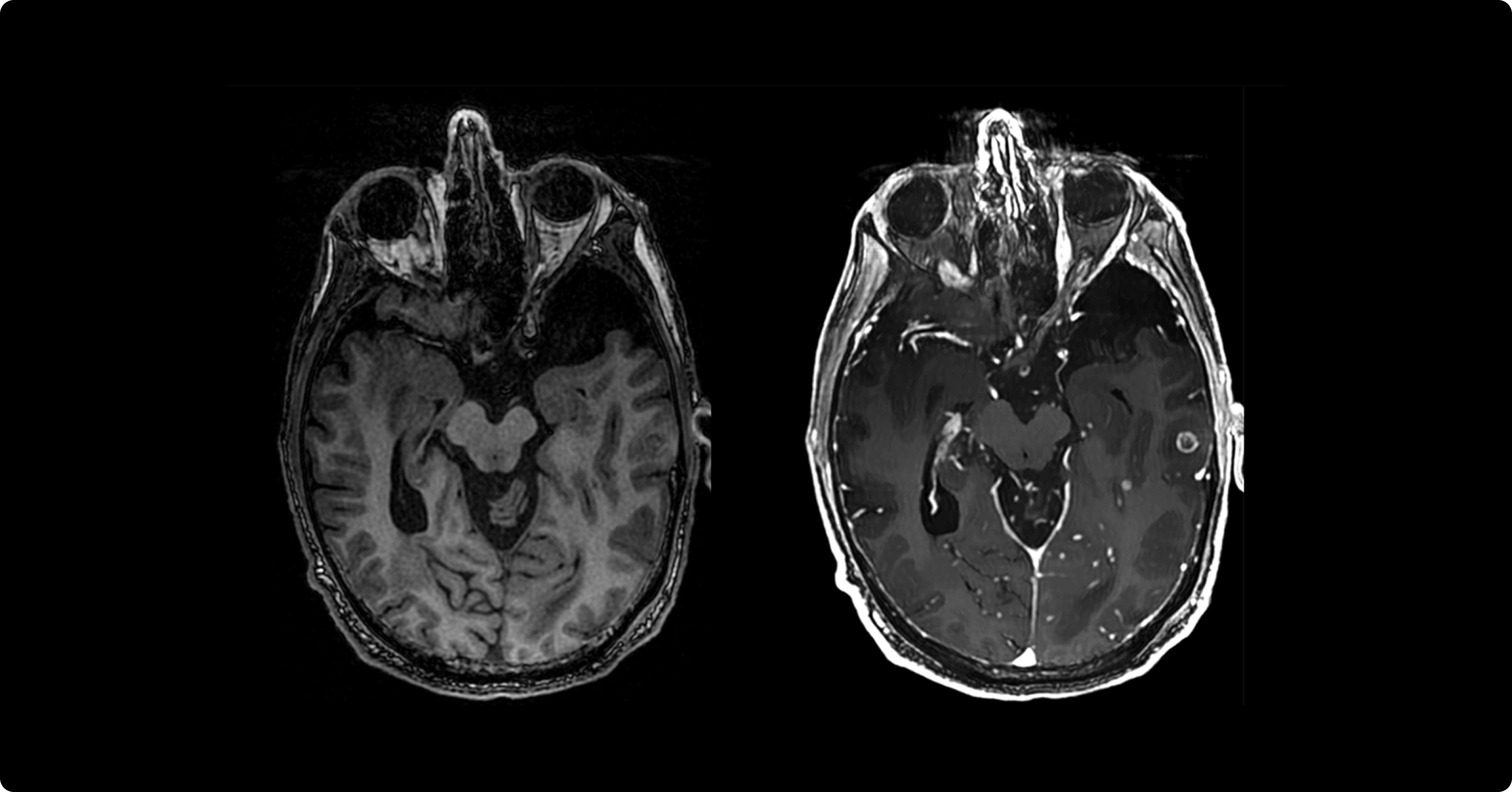
Eleven consecutive patients having routine brain MRI at 1.5T got their institution’s standard submillimeter 3D FLAIR plus an accelerated version that averaged 27% less scan time. The accelerated scans were processed with SubtleMR™. Three readers compared the standard, accelerated, and enhanced series side by side in random order for sharpness, perceived SNR, and lesion conspicuity, and scored each series on overall image quality.
All three readers gave the enhanced series an average overall score of 5.0. Standard series averaged 4.0, 4.0, and 4.8 across the three readers, and accelerated series 3.1, 3.2, and 4.5. The gap between enhanced and standard was statistically significant for two readers but not the third (P = 0.10). In side-by-side comparisons, all three readers preferred the enhanced series for sharpness, perceived SNR, and lesion conspicuity, two of them significantly.
The sample was small, and this was early work. The authors conclude that deep learning boosted perceived image quality, SNR, and resolution on 3D FLAIR despite a roughly 30% shorter scan.
Publications
MRI
MRI

Publications
MRI
MRI